

Routine Screening
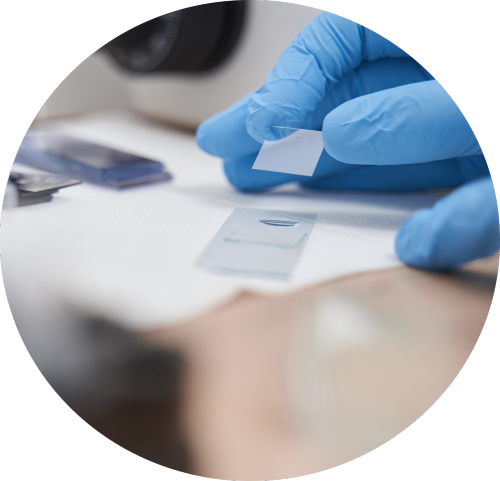
The PAP test owes its name to one Papanicalou, who developed the staining technique to expose the nucleiof cells under going maligant change. The test is designed to identify women at risk of developing cancer of the entrance to the womb (the so called cervix).
The cervix is accessed with the aid of a spectrum and cells from the cancer prone area are collected by means of a small brush or wooden spatula. At the laboratory the smear is stained using the Papaniclou technique and examined by a cytologist.
The common form of cervix cancer has a fairly predictable and rather slow progression. The early stages generally resolve spontaneously, although between 5% and 15% may progress to eventually become cancer.
Essentially all women who are sexually active are at risk. Sexual activity at a young age (i.e. in adolescence) is a particular risk factor due to the relative immaturity of the cervical cells at this stage. These cells are particularly susceptibles to carcinogens, especially virus cells which may be transmitted in seminal fluid. The viruses associated with cervix cancer are certain types of the Papiloma Virus (the wart virus) and the Herpes Virus.
Your first PAP should be performed about a year after commencing sexual intercourse. Provided the resluts are negative, it should be repeated each year for a further two years. This is necessary as the test is unfortunately not very sensitive and will only identify about 40% of abnormal cells the first time round. In a monogamous relationship, PAP tests can thereafter be performed at 3 yearly intervals, unless advised different by your doctor.
Not being in a monogamous relationship does increase your risk and annual smears should be performed. If viral cells or pre-maligant cells are noted, the smear will need to be repeated in 3 – 6 months and you may be advised to go for a coloscopic examination (essentially examination of the cervix through a microscope).
Not all pre-maligant lesions need to be treated and in those that do, treatment is generally fairly simple and does not affect fertility. A regular PAP test will essentially exclude the possibilty of advanced cervix cancer and still remains an important inconvenience for the health conscious woman.
Contraception
I suppose it’s really just a matter of choice. It’s a wonderful thing, if you think about it, the ability to chose. Particularly a choice as profound and as far reaching as creating life. Not that the creation is such a big deal. Students often get it right first time!
It’s the process, the parents, the pain, the package, the pampers, the purity and of course, the poo that goes with it all!
We are indeed considerably fortunate. We have the technology, the education system (yes, its still there!), the open society and a myriad choices to postpone procreation while enjoying for… um …enjoying ourselves! So where to start? Let’s start with the c’s …the calendar method, coitus interuptus and the good old condom.
They’re Free!! …(provided you don’t mind government issue on the condoms).
They don’t require a prescription and they don’t expose you to hormones. Pretty good! Down side? The first method takes a good understanding of physiology and a fair measure of trust in it’s consistency (which it isn’t)…the last two methods rely on man …and quite simply …you can’t!
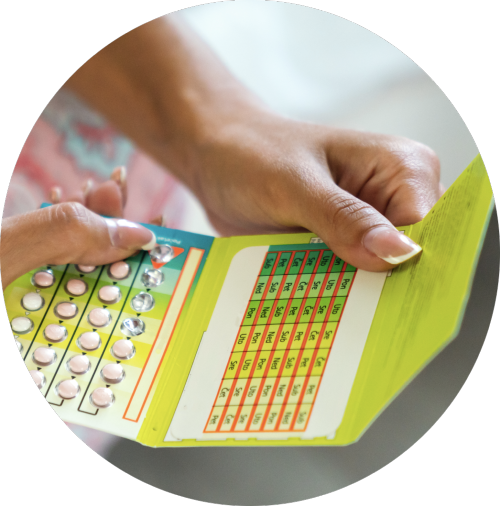
Condoms are of course essential items of protection against all the nasties out there, but here we are dealing purely with the matter of choice. ‘The Pill’is next on the menu. Aah yes! The great liberator! Much maligned, much misunderstood maybe, but magnificent in it’s management of menstruation, masterful in missing maternity!
The pill is extremely versatile. It can be used to ease the burden of painful periods, to lessen the impact of acne, to smooth over the jagged edges of PMS and to regulate the irregular. It has been refined, trimmed and redesigned over the years. The current offering is low dose and metabolically friendly.
There are contraindications and cautionaries, but the pill remains the mainstay of contraception. The injectables are next. Low risk and highly effective. Still the most popular choice in the government clinics and a very handy choice while nursing. The delayed return to fertility, weight issues and a mood suppressing effect of particularly the three month option is a detractor however I am not averse to the two monthly injectable.
‘The Loop’ has been around forever. Not on its current form, of course, but placing items such as pebbles and metals in the womb have been around at least since pre-history (and we have the bones to prove it!) Copper hasions. It causes a weak electrical charge Now for the new kids on the block ( article pending)
Childbirth

Natural Birth
The ultimate experience of womanhood and the aspiration of the majority of couples attending the practice. Pregnancy and birth are physiological conditions and the female body is awesomely capable and superbly adapted to take on the challenge! Route of delivery is a pressing question and one I am often faced with early in our journey together. There is only one answer: Natural until proven otherwise! …and in normal conditions this proof is only tested after 36 weeks gestation.
There are many, many variables involved in the process, the genetics of the unborn child, it’s spacial orientation and the ultimate dimensions of the pelvis to name but a few.
Accepting that all is in place for natural birth at 37 weeks, the waiting game commences. Labour is heralded by one of 3 things:
- Regular painful contractions generally radiating from back to front. The emphasis is on 'regular'. A good way of differentiating between true and false labour is to luxuriate in a hot bath ...this promotes the true labour and obviates the false.
- Rupture of membranes. Not something you will easily forget, especially if it happens at that late baby shower! There can be as much as a liter of fluid that responds to the call of gravity on short notice.
- Vaginal bleeding at term. A small mix of mucus and blood is called a 'show' or operculum and may precede labour by several days. Clear blood, like a menstrual flow, is a call to the hospital without further delay.
Osteoporosis
Today we will spend a little time on an oft forgotten, largely neglected,yet critical bodily organ. It is so critical to our humanity, in fact, that in it’s absence we would be blobs…. jelly fish, if you like. You’ve guessed it…we are getting down to the bare bones! The skeleton is a dynamic organ…admittedly not quite as dynamic as the heart, liver, brain,’or just about anything else, but dynamic none the less! Bone comprises 4 major components: osteocytes (long suffering bone cells), osteoclasts (the ultimate scavengers) and osteoblasts (the working class).They all reside, work and play in a mineral matrix.
The skeleton is not just a clothes-hanger, it is also a a factory (for blood cells) , a ware-house (for minerals) and a body guard for sensitive spots (like the brain). Bone health and good health are thus synonymous.
Our bones are at their prime between 25 an 30 years of age…and our mission in later years is to keep the numbers as close to prime as we possibly can. We call bone failure,’fracture’. Even primetime bone is prone to failure under certain circumstances (like paragliding in storm or meeting up with Mike Tyson on a bad day),’but as we age, and particularly if we have not been bone conscious in our youth, failure may occur quite spontaneously.

Spontaneous fracture, or fracture with minimal trauma is called osteoporosis, severe osteoporosis to be correct. Quite literally, osteoporosis means porous bone and a cross section is very scary sight indeed! Normal bone is virtually solid. There are small cavities (called remodeling units) where osteoclasts dig and osteoblasts fill at more or less the same rate. It’s when this process unhinges (as in poor choice of parents, menopause, prolonged bedrest or a trip to Mars) that the osteoclasts gain the upper hand. This may be due to excessive stimulation or to osteoblastic strike action or suppression. The result is see-through bone …with a laticework of frail and fractured bony arches and huge open spaces.
Clinical suspicion, fracture,’plain X-Ray and quantitative ultrasound are all helpful in establishing the diagnosis, but as the condition is systemic,’a Dual Energy Xray Absorbtiometry DXA test, is required before pharmacological treatment for the condition can be commenced.
Not that medicine is the answer, nor even supplements. Awareness is the key. That and consideration…for your humble, hard working skeleton!
It’s about nutrition, exercise, fresh air and a positive outlook.
All is not as it seems. There is more calcium in 100g of sesame seeds than in a glass of milk…green leafy veg, in fact most farm fresh veg is perfect. Eggs, butter, salmon and Shiitake mushrooms are great sources of vit D (great breakfast idea !) Impact exercise out in the sunlight …or a walk on the beach …perfect! Good clean air! …sorry!…the no smoking zone is even smaller now…. As far as a wee doch and doris in the evening is concerned …..well, as long as it’s a wee one!!
Important Downloads
Menopause
It’s urban legend that everything that ever goes wrong with women has men in it…and so we come to men-o-pause. This is, of course the time that women pause to consider if they need men in their lives at all! …well ….thats only part of it….
Menopause occurs in all women and is essentially the cessation of menses. It can only be diagnosed retrospectively when 12 consecutive months have passed without a menstrual period. Perimenopause, on the other hand, is that uncertain time when cycles are skipped and symptoms are sporadic. Age at menopause is also variable. The mean is generally accepted to be 50 years of age with range 45 to 55. In my practice the range of natural menopause is from 40 years to 60 years! (Way to go Ria!) Anything below age 40 would be classified as premature and would be subject to investigation.
Clearly the menopausal transition signifies an end to the ability to reproduce naturally ( I have to add that as those crazy Italians are forever pushing the boundaries with ART ….and I’m not talking Michelangelo here…but Artificial Reproductive Techniques). This fact on its own can often result in distress and a feeling of loss….or a sigh of relief and a burden lifted!It is, however, the physical symptoms, signs and physiological changes that make this phase so important.
What do women and killer whales have in common? …… ( I sense I may be treading on dangerous round with this one! ) ….The answer is: Menopause a significant time prior to a natural demise (Pilot whales too, but that would have ruined the riddle)
Woman potentially undergo menopause at mid life to prevent competition with their offspring …who are now also reproducing. Careful study of indigent and tribal custom will note that it is the menopausal women that tend the young while the women work in the fields (bedroom/kitchen) and the men hunt or fight (play with the remote/drink beer with other men).
A woman is born with a finite number of oocytes (around 400 000) in the ovaries. Over the years the numbers fall dramatically until there are essentially too few left to ovulate. The pituitary gland of the brain produces a substance called Follicle Stimulating Hormone or FSH which stimulates the oocytes to develop. These oocytes in turn produce estrogen which prepares the lining of the womb for a potential pregnancy and by means of feedback, suppresses FSH release and precipitates a pituitary surge of Luteinising Hormone or LH. This hormone triggers release of the ovum. As oocyte numbers diminish, estrogen levels fail to suppress FSH and the levels remain consistently high (above 30 IU/L). This is then the biochemical marker for menopause…..This is of course important if your gynaecologist has for whatever reason, deprived you of your womb.
The bodies temperature regulating mechanism is situated in the hypothalamus, intimate next door neighbour to the pituitary. The persistently high FSH plays havoc with the mechanism, resulting, among other things, in the release of stress hormones such as adrenalin and nor-adrenalin which in turn causes sweating, vasodilation and palpitations. Hot flushes / flashes last anything between 30 seconds and 10 minutes and tend to diminish with years from menopause. About 85% of women will be afflicted to varying degrees by this phenomenon. Most women will experience a natural cessation over time. The good news is that 15% of women will never experience a hot flush, the bad news is that 15% of women will have them for good!
Low estrogen levels affect the skin. Estrogen is largely responsible for skin turgor or hydration …that thing that gives women soft, smooth skin and men that craggy, Marlboro look. So, menopause means more laugh lines and crows feet. It also means thinning of the vaginal skin and dryness. Combine this with a concomitant reduction in testosterone levels and we have very bad news in the bedroom.
Changes in hormones traditionally cause emotional mayhem ( I have a friend who habitually refers to his wife’s pre-menstrual phase as ‘mad cow disease’…in confidence to me, of course!) so its not hard to imagine the effect of changes as profound and permanent as menopause. There are changes in the levels of neurotransmitters in the brain which can lead to depression, aggression, irritability or plain and simple irrationality!
More disturbingly is an acceleration in bone loss and an increase in the risk of vascular disease including heart attacks. The lipid profile often becomes less favourable and an exacerbation of joint pains and stiffness is not uncommon.
The adage of ‘if it doesn’t itch, don’t scratch it’ holds true for menopause too. Menopause is a natural occurrence and not a disease. Our extended life-span is however a new phenomenon and a knowledge of the subject, it’s physiology and effects are essential. From a medical point of view, its important to ask the questions … Are you experiencing ‘hot flushes’ or sweating unduly at night? Is this affecting your quality of sleep? Have you lost interest in your partner (for no good reason that is) and is sex painful? Do you experience painful joints or have you (or others) noticed a change in mood or patience?
There are good menopausal questionnaires that can help you assess your own status
That is the question!
Menopausal management with hormones was dealt a significant and largely unfair blow in 2002 with the preliminary results from the Woman’s Health Initiative trail and compounded by the Nurses study. These studies showed an increase in breast cancer, heart attacks and strokes in users. To be fair, these studies heightened awareness and lead to vociferous debate and analysis which has benefitted knowledge. The initial findings, however, scared millions of women and thousands of physicians away from a very effective form of therapy and fueled an explosion of sales for the naturopathic and herbal industries alike.
Hormones taken appropriately in the perimenopause and early post menopause, say up to age 60, reduce the incidence of breast cancer, heart disease, colon cancer, osteoporosis and sexual dysfunction and do not cause an increase in thrombosis or stroke.